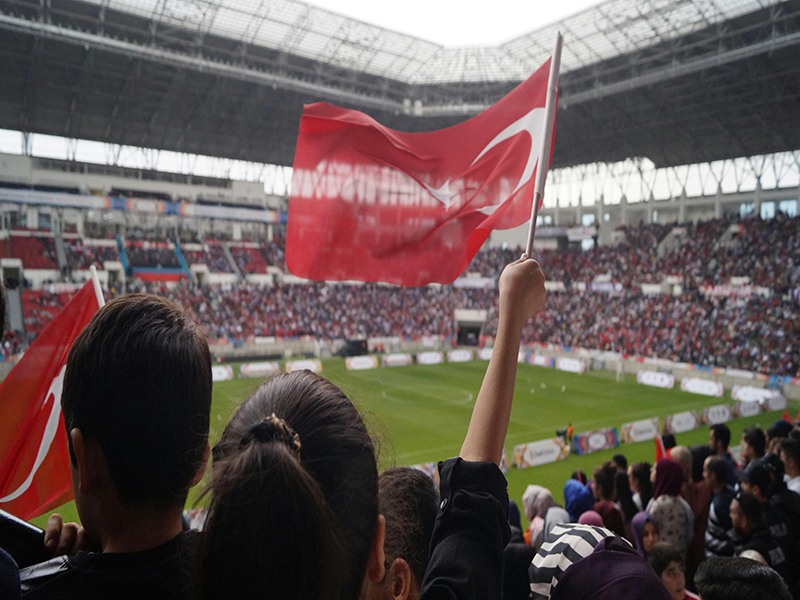
Seven European comebacks to the stage in Football are highlighted by Turkey. A larger pitch and a familiar feeling of history being rewritten will be present at the 2026 FIFA World Cup when several European countries return to football’s largest venue after extended absences.
The event, which will take place in the United States, Mexico, and Canada from June 11 to July 19, will extend to 48 teams for the first time, changing the qualification process and paving the way for much anticipated returns around Europe.
16 direct spots in the expanded format were awarded to UEFA. Twelve clubs advanced through group winners, while four more advanced through the March 2026 playoffs. None of them has the symbolic weight of Turkey’s return, but seven of them are ending major World Cup droughts.
Turkey ends a 24-year wait
For the first time since 2002, the Türkish Crescent-Stars will return to the World Cup stage, ending a 24-year hiatus that included five unsuccessful qualification cycles and numerous near misses. In contemporary Turkish football history, their final appearance continues to be the pivotal moment.
Under coach Şenol Güneş, Turkey achieved their best-ever performance at the 2002 tournament in Japan and South Korea, placing third after defeating co-hosts South Korea in the bronze playoff.
That run, which was fueled by exceptional leadership and group discipline, established a benchmark that has influenced every campaign since.
Turkey has fluctuated between promise and disappointment ever since. They continued to compete in the UEFA Nations League format and became frequent competitors at the European Championships, but they consistently failed to qualify for the World Cup.
The breakthrough for 2026 came during the playoffs, when Turkey shown tenacity in stressful games, such as a resounding victory over Kosovo that guaranteed their spot in North America.
A generational transition is also indicated by its comeback. Veterans from previous rounds are no longer the team’s anchors. Rather, it is being defined by a new core centered on Kenan Yıldız, whose growth at Juventus has brought attacking depth and confidence, and Arda Güler, whose inventiveness in midfield has garnered attention at Real Madrid.
After a 28-year hiatus, three giants are back
Three European teams make a comeback after their previous appearance in 1998, which is one of the longest collective absences in the history of the modern World Cup.
Despite taking various routes to qualify for the 2026 edition, Norway, Scotland, and Austria all achieved the same goal: a return to prominence at the top level of the sport.
In qualifying, Norway emerges as the most dominant of the three. They combined physical intensity with effective offensive to lead their group with an undefeated record. Despite flashes of potential throughout the years, their long absence from the event has now been broken by a generation led by Erling Haaland, whose presence has changed expectations from participation to competition.
The tone of Scotland’s comeback is different. For a team molded by Premier League experience and local unity, years of near-misses and playoff heartbreak have given way to direct qualification and a long-awaited breakthrough. The current group arrives with significantly more tactical discipline and depth than their previous appearance in 1998, which terminated at the group stage.
With one of their most consistent qualification runs in decades, Austria completes the trifecta. Their ascent has been based on consistency and organization, bolstered by seasoned leaders and a robust pool of up-and-coming talent. It is a team that, at the appropriate moment, combines momentum and maturity.
Czechia rediscovers its existence
After a 20-year hiatus marked by a protracted rebuilding period following their successful early 2000s era, Czechia returned for the first time since 2006.
They qualified via a difficult playoff path that included a victory over Denmark in a penalty shootout. The outcome demonstrated a team that could withstand stressful situations even in the absence of their former steady supremacy on the European scene.
Bosnia return After a 12-year hiatus after their 2014 debut, Bosnia and Herzegovina will participate in their second World Cup.
Expectations were based on their attacking prowess and seasoned leadership when they made their debut in Brazil.
This time, they have earned their comeback with yet another playoff season, which included a crucial triumph over Wales.
Instead of treating qualification as an exception, the team now combines experience with a younger generation with the goal of stabilizing Bosnia’s position in international events.
Sweden after Zlatan
Returning after missing the 2022 World Cup, Sweden’s 2018 quarterfinal run—their best since 1994—ends an eight-year hiatus. Their victory over Poland in the qualifying playoffs is indicative of a move away from individual celebrity and toward a more shared identity.
A more balanced and system-driven approach has been made possible by the post-Zlatan Ibrahimovic era, which has also forced structural modification.
Europe has benefited greatly from the increase to 48 teams, which has changed the rhythm of qualification across continents. While maintaining the level of competition in qualifying groups and the playoffs, more locations have decreased the margin for repeated exclusion.
Source: Daily Sabah
Please click the link for Property for Sale in Turkey