As archeologists discover shipwrecks, misplaced cargo, and buried tales beneath its four oceans, Turkey, a pioneer in underwater archeology, is reviving past expeditions.
Outsiders are significantly less familiar with the scope of what lies under its seas, despite the country being more well-known internationally for its Byzantine and Ottoman sites and historic ruins strewn over its landscape.
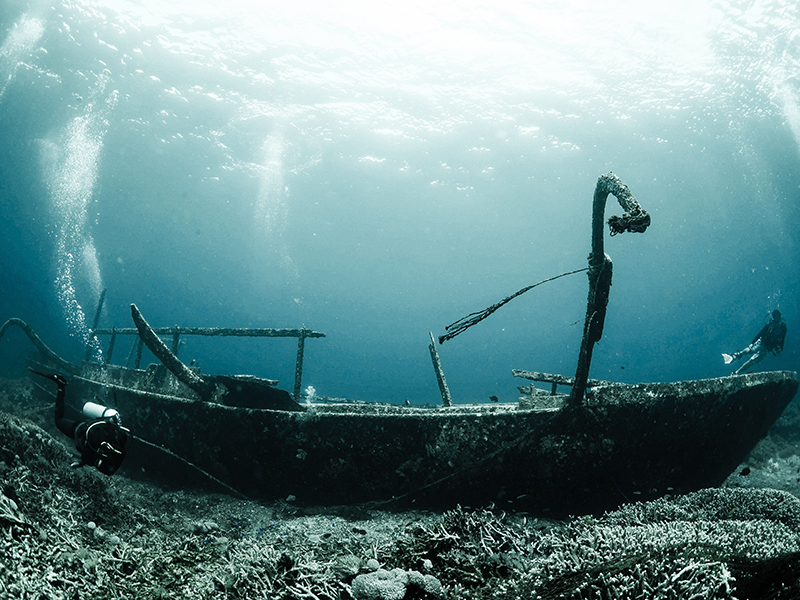
Discoveries from Turkey’s waterways, which for millennia transported ships between the civilizations of Anatolia, the Aegean, the Levant, and Egypt, include shipwrecks, cargoes of copper ingots, ancient amphorae, and bronze weaponry.
With more than 8,300 kilometers (5,157 miles) of coastline, the nation is situated at the crossroads of numerous important marine routes and borders four seas: the Mediterranean, Aegean, Marmara, and Black Seas.
The ancient Eastern Mediterranean commercial realm included its western and southern coasts in particular. According to Hakan Oniz, an underwater archeologist from Akdeniz University, we have found and recorded over 430 shipwrecks along Turkey’s Mediterranean coast alone.
“This is an amazing number of documented shipwrecks all over the world, not only for Türkiye,” he said.
The Origin of Underwater Archeology
The shores of Turkey have a significant role in the contemporary history of underwater archeology.
American archeologist George Bass examined the Cape Gelidonya shipwreck off Antalya in 1960 after it was first discovered by a Turkish sponge diver in the 1950s.
It is recognized as the first underwater scientific excavation of an old shipwreck.
“In a way, Türkiye is the birthplace of underwater archaeology; however, the Ottoman Empire conducted underwater excavations 70 years before George Bass.”
Osman Hamdi Bey, an Ottoman painter, archeologist, and the first director of the Istanbul Archeology Museums, directed archeological excavations in the Aegean region surrounding Farmakonisi, now known as Bulamaç Island, in the 1890s.
According to Ottoman archival research, in 1891, divers were hired to look for artifacts there; the results were then conveyed to Istanbul. Istanbul’s collections still have some of the gold coins that were found there.
Asar-i Atika, the Ottoman antiquities law of 1884, was one of the first state legal frameworks in history to specifically treat underwater archeological material.
The rule was a reaction to foreign excavators’ widespread excavation and export of artifacts. The legislation effectively prohibited the unlawful transfer of antiquities from Ottoman territory, even those recovered from the sea, by designating them as state property.
Below the Wreckage
The Uluburun wreck is one of the most well-known off the coast of Kaş.
One of the wealthiest and most varied Bronze Age cargoes ever discovered was uncovered during an 11-year excavation that began in 1982. It contained approximately 10 tons of copper and 1 ton of tin ingots, glass ingots, ebony logs, ivory from elephants and hippopotamuses, and a gold scarab carrying the name of the Egyptian Queen Nefertiti.
In Istanbul, a completely other kind of discovery was made—and it had nothing to do with diving. Archeologists discovered the submerged remnants of Theodosian Harbor at Yenikapı, a Byzantine-era harbor that had progressively filled with sediment and vanished from view, while building the Marmaray rail project.
Together with evidence of a Neolithic town that dates back about 8,000 years, archeologists eventually found 37 shipwrecks from the fifth to the eleventh century, making it the largest collection of medieval ships found at a single excavation site.
Using research vessels outfitted with remotely operated underwater vehicles (ROVs) to access locations tens of meters below the surface, Oniz and his team are currently working on three shipwreck sites around the coast of Antalya.
The oldest of those locations is close to the Kekova Islands, an area that tourists are more familiar with for its partially submerged ancient remains than for what lies underneath. There, research is being done on an Early Bronze Age wreck that included Levantine-type amphorae.
A second Bronze Age vessel, approximately 3,600 years old, was discovered near Kumluca, transporting copper ingots said to have originated from the island of Cyprus.
According to Oniz, the Kekova and Kumluca wrecks precede Uluburun and Cape Gelidonya, two Bronze Age ships that underwater archeologists first discovered in Turkey, both of which are dated to many centuries later.
The third location, the “Ceramic Wreck” off Adrasan, dates to a far later era. It was transporting hundreds of plates, trays, and bowls, each packed in raw clay to withstand the journey from the port of Rhosus in Antioch toward Rome, according to Oniz’s team, who have dated it to the late Hellenistic or early Roman era.
According to Oniz, the ship’s period was narrowed to the middle of the first century B.C., when the Roman statesman Cicero ruled the neighboring province of Cilicia, thanks to a coin that was recently found at the site.
The finding of 122 plates, bowls, and trays at the excavation site, which illustrate the period’s opulent dining culture, was revealed on Monday by Turkish Culture and Tourism Minister Mehmet Nuri Ersoy.
From the Ocean to the Coast
Additionally, the excavations are a part of a larger extension of archeological work under the Legacy to the Future program, which was started in 2023 by the Culture and Tourism Ministry.
Over 15,000 discoveries were added to the scientific record by 2025, when the programme had covered 255 excavation sites throughout 65 provinces.
Mehmet Nuri Ersoy, Minister of Culture and Tourism, has also gone underwater with archeologists to visit other shipwreck sites and observe the work firsthand.
New initiatives to conserve and exhibit the discoveries on land are also being spurred by the increasing number of underwater excavations.
The primary museum devoted to the subject in the nation is still the Bodrum Museum of Underwater Archeology, which was founded in 1964. Finds from significant wrecks like Uluburun, Yassıada, and Serçe Limanı are included in its collections.
A Mediterranean Underwater Archeology Museum is being built at the ancient site of Idyros in Antalya’s Kemer district. The museum’s goal is to compile findings from the area’s seabed.
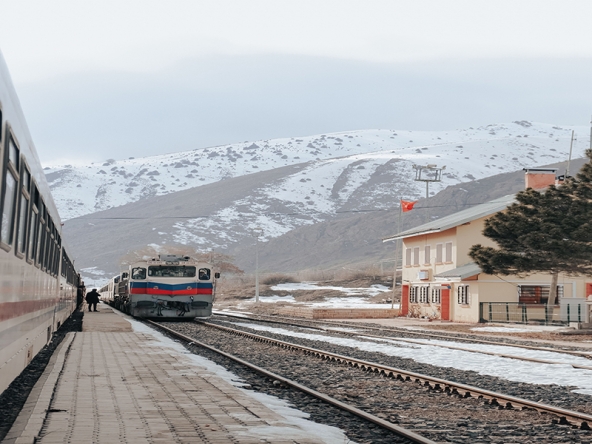
A “Four Seas Museum” concept focused on Turkey’s maritime heritage throughout the Mediterranean, Aegean, Marmara, and Black Seas is being included into the renovation of Istanbul’s historic Haydarpaşa railroad station.
Former Venice Biennale curator Luca Molinari would oversee the museums approximately 10,000 square meters of exhibition space, which would include an archeological park on the station grounds and antiquities from all 81 of Turkey’s regions.
Turkey is planning to recover more cultural artifacts that were smuggled abroad. More than 26,000 cultural artifacts have been repatriated to Turkey since 1980.
‘If you are considering buying in Turkey and you’d like to know more about Turkey, our About Turkey guide is a great place to start. Similarly, if you have further questions on how to buy a property in Turkey, you can download our free buying guide, or you can visit our ‘How to Choose Property in Turkey’ guide, if you haven’t yet settled on your final destination.
Source: Daily Sabah
For information on Property for Sale in Turkey please click the link